Eastern Diamondback Rattlesnake
The largest venomous snake in North America, this species has a distinctive diamond pattern and a rattle at the end of its tail. It is most often found in dry, open habitats but may occasionally appear near residential areas close to undeveloped land.
Timber Rattlesnake
Less common than the eastern diamondback, timber rattlesnakes prefer wooded and forested areas and are rarely encountered in densely populated or urban settings.
Dusky Pygmy Rattlesnake
Small but venomous, pygmy rattlesnakes are frequently found in brush, mulch beds, pine flatwoods, and wooded yards. Their rattle is very faint and may sound more like a soft buzzing than a traditional rattle.
Cottonmouth (Water Moccasin)
Cottonmouths are semi-aquatic snakes commonly found near ponds, lakes, canals, swamps, and drainage areas. They are often mistaken for non-venomous water snakes, which leads to frequent misidentification.
Eastern Coral Snake
Coral snakes are identified by their red, yellow, and black banding. A common rhyme helps distinguish them from non-venomous lookalikes: “Red on yellow, kill a fellow; red on black, friend of Jack.”
Southern Copperhead
The southern copperhead is the sixth venomous snake species in Florida. It has a copper-colored head and hourglass-shaped bands along its body. In Florida, copperheads have a very limited range, primarily in parts of the Panhandle, making them uncommon in most areas of the state.
What Are The Non-Venomous Snakes in Florida?
Out of the roughly 45 snake species found in Florida, only six are venomous. That means most snakes encountered across the state, about 39 species, are non-venomous. Below is a comprehensive, commonly accepted list of these snakes and where they are typically found.
Snakes Commonly Around Homes & Yards
These are the ones people most often encounter on residential properties.
- Southern Black Racer
- Eastern Coachwhip
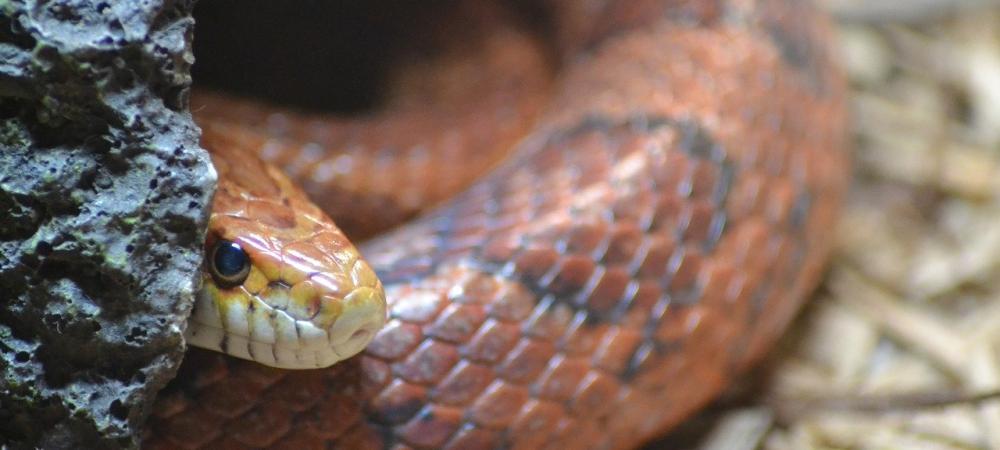
- Corn Snake (Red Rat Snake)
- Gray Rat Snake
- Eastern Garter Snake
- Eastern Ribbon Snake
- Rough Green Snake
- Smooth Green Snake
- Ring-necked Snake
- Eastern Hognose Snake (often mistaken for venomous)
- Southern Hognose Snake
Water Snakes (Frequently Mistaken for Cottonmouths)
These non-venomous snakes are often found in aquatic habitats such as ponds, lakes, rivers, and canals
- Northern Water Snake
- Florida Green Water Snake
- Brown Water Snake
- Banded Water Snake
- Glossy Crayfish Snake
- Striped Crayfish Snake
Small, Secretive, or Burrowing Snakes
These snakes are usually found under debris, mulch, or soil; rarely seen.
- Eastern Worm Snake
- Florida Worm Snake
- Scarlet Snake
- Red-bellied Mud Snake
- Eastern Mud Snake
- Rainbow Snake
- Crowned Snake
- Black-crowned Snake
- Red-crowned Snake
Kingsnakes & Milk Snakes (Beneficial Predators)
These are typically found in wooded areas, pine forests, grasslands, and agricultural land, where they shelter under logs, debris, or leaf litter.
- Eastern Kingsnake
- Florida Kingsnake
- Speckled Kingsnake
- Scarlet Kingsnake
- Eastern Milk Snake
Rare Non-Venomous Snakes
Less commonly encountered, often habitat-specific.
- Pine Woods Snake
- Short-tailed Snake
- Rim Rock Crowned Snake
- Flatwoods Salamander Snake (very rarely seen)
- Gulf Hammock Rat Snake
What Should You Do If You See a Snake on Your Property?
If you encounter a snake, the safest action is to keep your distance and avoid attempting to handle or remove it yourself. Snakes will often move on naturally if left undisturbed.
If the snake is inside your home, repeatedly appearing, or causing concern due to proximity to people or pets, contacting a local wildlife control company is the safest and easiest option. Florida has wildlife protection regulations, and improper handling can pose safety and legal risks. Licensed professionals can assess the situation and ensure the snake is addressed responsibly and in accordance with Florida wildlife laws.
Final Thoughts
While venomous snakes exist in Florida, encounters are relatively rare, and most snakes play an important role in the local ecosystem. Learning the difference between venomous and non-venomous species can help reduce fear and promote safer responses when a snake is spotted.
If you encounter a snake and are unsure how to proceed, East Coast Pest Control can provide guidance on next steps and help determine whether professional assistance is needed. Contact us today if you're not sure!