Formosan Termites in Florida: A Closer Look at One of the Most Destructive Species
What Makes Formosan Termites Different?
Formosan termites (Coptotermes formosanus) are often called “super termites” for a reason. What sets them apart is the sheer size and complexity of their colonies.
Their Colony Structure Is on Another Level
Formosan termites operate with a level of coordination that makes them especially hard to control:
- Workers constantly forage for food and maintain the nest
- Soldiers defend the colony and have distinct orange-brown heads with strong mandibles
- Reproductives (swarmers) establish new colonies and are attracted to light
One unique trait: Formosan termite soldiers can actually secrete a milky defensive fluid to fend off threats. This is something most homeowners never see but pest professionals use to identify them.
Above-Ground Nests (Carton Nests)
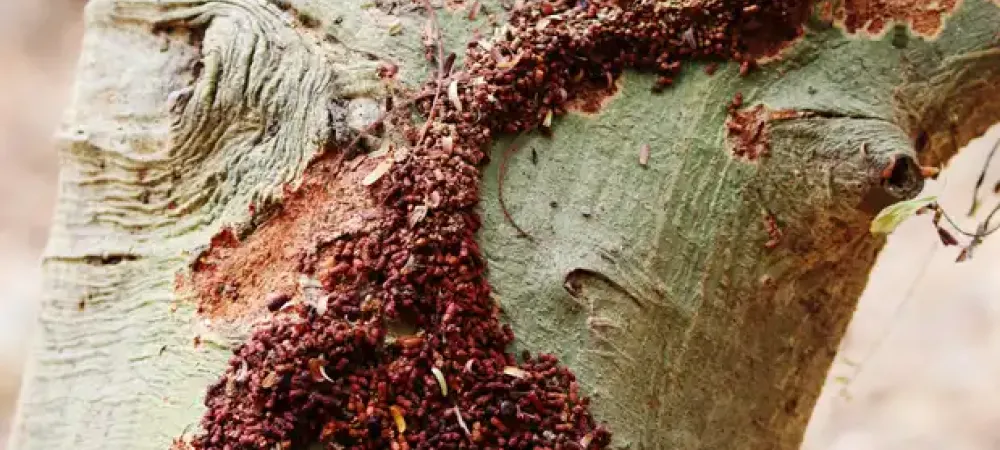
One of the biggest differences between Formosan termites and other subterranean species is their ability to build carton nests above ground. These nests are made from a mixture of chewed wood, soil, and saliva. They’re often found inside wall voids, attics, crawl spaces, and roof structures.
As long as there’s a moisture source (like a leak), Formosan termites don’t need to stay connected to the soil. This allows them to infest parts of a structure that other termites typically can’t reach as easily.
Why Do They Spread So Fast in Florida?
Formosan termites are especially well-established in Florida due to a few key factors:
- Long swarming season: Typically from April through June, often at night
- Strong attraction to light: Swarmers are commonly seen around windows, porch lights, and streetlights
- Rapid colony expansion: A single mature colony can forage across a wide area
Unlike many termite species, Formosan termites can aggressively attack multiple parts of a structure at once, rather than slowly expanding from a single entry point.
What Does Their Damage Looks Like?
Formosan termites can hollow out structural beams from the inside, leaving the outer surface intact. Damage may appear suddenly because they’ve been working unseen for months. They don't just chew through not wood, they can also destroy foam insulation, thin plastics, and even soft metals like lead or copper (in rare cases).
Because of their colony size, they can cause significant structural damage in a matter of months, not years.
Key Signs That Point Specifically to Formosan Termites
While many termite signs overlap, a few indicators are more closely associated with Formosan termites:
- Large swarms at night, especially near lights
- Huge numbers of discarded wings (often in piles)
- Carton nest material inside walls or ceilings
- More aggressive and widespread damage than expected
If you’re seeing termite activity that feels “over the top,” there’s a good chance Formosan termites could be involved.
Final Thoughts
Formosan termites aren’t just another termite problem. They’re a more aggressive, more adaptable, and more destructive species that requires a deeper level of understanding. In Florida, where conditions are ideal for their growth, staying informed about their unique behaviors can make all the difference in catching an infestation early and minimizing damage.
Because of their size and ability to form secondary nests, Formosan termite colonies are notoriously difficult to eliminate without professional treatment. If you're in need of professional termite treatments, East Coast Pest Control can help! Contact us today for a free estimate and guaranteed relief!